
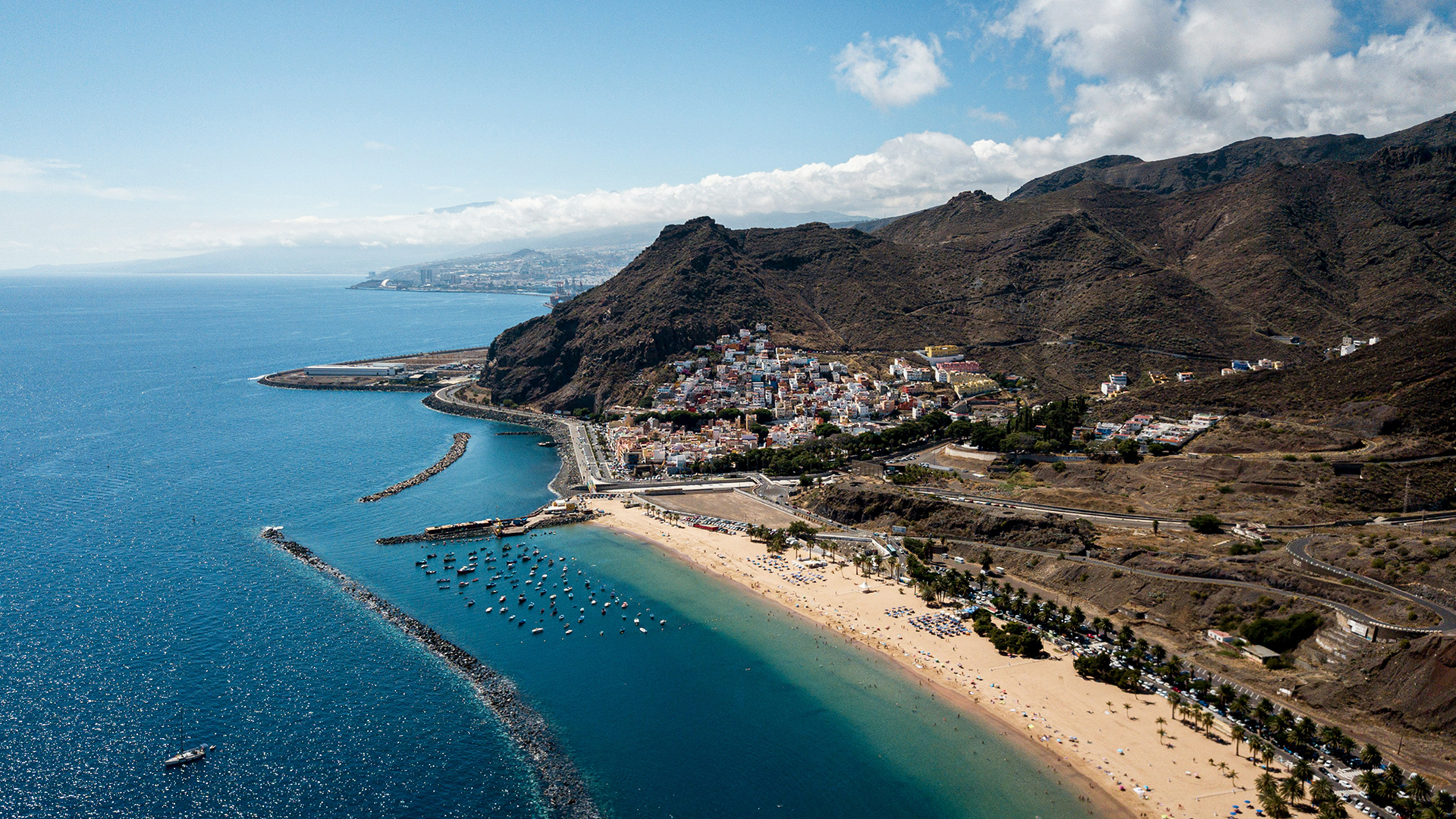
Golden sands and calm Atlantic waters at Playa de Las Teresitas, Tenerife / Credit: Maxim Berg
For Canadian travellers, Tenerife has long required connecting through a European gateway such as Madrid, Lisbon, or London. Direct Air Canada service now makes the Canary Islands far easier to sell, especially for those seeking winter warmth and quality resorts, as well as a destination that offers more than a typical beach holiday.
Tenerife combines reliable winter sunshine with Spanish culture, volcanic scenery, excellent dining, and a broad range of accommodations. It’s an excellent choice for travellers who have already done the familiar Caribbean routes and want a change of pace without sacrificing warm weather.
In 2025, Tenerife received 7,130 passengers from Canada, reflecting consistent year-over-year growth, according to Turismo de Tenerife. The primary Canadian source cities were Toronto, Montreal, Calgary, and Vancouver. This upward trend highlights a growing interest among Canadian travelers in Tenerife as a destination.
Air Canada flights to Tenerife will be operated with the airline’s new Airbus A321XLR, which features lie-flat seats in the Business Class cabin, offering a widebody experience in a narrowbody aircraft. With seating for 182 passengers in a configuration of 14 Signature Class seats and 168 Economy Class seats, the A321XLR also marks the beginning of a new era for Air Canada cabin interiors with the introduction of a new design standard for the onboard experience.

Air Canada’s new A321XLR takes Tenerife flights to the next level with lie-flat seats and a sleek
cabin design / Credit: Air Canada
Tenerife Winter Weather: Warm, Sunny, and Comfortable
Known as the “Island of Eternal Spring,” Tenerife typically sees winter daytime highs around 22°C (72°F) along the coast. It appeals to those who want sunshine and outdoor time without the heavy heat and humidity common to many tropical destinations.
However, it’s important to note Tenerife’s varied microclimates, shaped by its volcanic terrain:
- South coast: Generally sunnier, drier, and warmer. Ideal for beach-focused holidays.
- North coast: Greener, cloudier, and more local in character. Best for scenery, food, and culture.
- Mount Teide and the highlands: Much colder than the coast, with occasional snow and below-freezing temperatures.

Playa de Las Teresitas, a golden-sand beach near Santa Cruz de Tenerife in the Canary Islands
/ Credit: Luis Gonçalves
Tenerife by Month: December to February
- December: Mild days perfect for beach walks, sightseeing, and outdoor dining. Evenings can be cool.
- January: Usually the coolest month at sea level, though the south remains noticeably sunnier than the north.
- February: A great time for almond blossoms, Carnival, and early signs of spring.
Travellers should pack swimwear and sun protection, along with a light jacket for evenings. Anyone visiting Teide should bring warm layers and suitable footwear.

Playa del Duque, Costa Adeje – Tenerife’s beautiful beach escape / Credit: NuKi Chikhladze

Calle Mequinez, a charming street in Puerto de la Cruz / Credit: Boris Busorgin
Where to Stay in Tenerife: South for Sun, North for Local Character
Choosing between Tenerife’s north and south coast should shape the itinerary from the start.
Southern Tenerife: Resorts, Beaches, and Reliable Sunshine
Costa Adeje, Playa de las Américas, and Los Cristianos cater mostly to traditional sun-and-sand visitors. These resort areas offer dependable sunshine, sandy beaches, a large hotel selection, and easy access to restaurants, excursions, and nightlife.
Recommend the south to travellers who want:
- A straightforward resort holiday
- More predictable beach weather
- A wide choice of all-inclusive and upscale hotels
- Easy access to boat excursions and family activities
For guests considering Punta Cana or similar Caribbean resorts, southern Tenerife is a natural alternative. The atmosphere is European, the scenery volcanic, with opportunities for sightseeing beyond the hotel zone.
Northern Tenerife: Scenery, Culture, and a Local Feel
Puerto de la Cruz, Garachico, and the Anaga region offer a greener, more traditional side of the island. Expect colonial architecture, banana plantations, local restaurants, dramatic viewpoints, and volcanic natural pools known as charcos.
The north is ideal for those who value culture, hiking, scenery, and local character as much as pool time. El Caletón in Garachico is among the island’s best-known natural swimming areas.
Be clear: the north is often cloudier and less predictable in winter than the south.
Safety Notice: Northern coastal pools and promenades can experience dangerous winter ground swells (mar de fondo), leading to sudden closures. Municipalities may close access with little warning. Travellers should always follow posted warnings and never enter closed swimming areas.

A short-finned pilot whale (calderón tropical) surfaces off Tenerife in the deep Atlantic / Credit: Gustavo A. Pérez

Majestic El Teide volcano shrouded in mist — a timeless Tenerife icon
Experiences Beyond the Beach
Whale and Dolphin Watching from the South Coast
The waters between Tenerife and La Gomera are home to resident pilot whales and bottlenose dolphins. Half-day excursions from Los Cristianos and Puerto Colón are easy additions to a southern resort stay.
Recommend operators with the Canary Islands’ Blue Boat accreditation, identifying authorized companies following responsible wildlife-watching practices. Sightings aren’t guaranteed, but this remains one of Tenerife’s strongest year-round excursions.
Explore Mount Teide National Park
Mount Teide offers one of the island’s most memorable contrasts. Travellers can leave a warm southern resort in the morning and reach a high-altitude volcanic landscape by afternoon.
The national park boasts lava fields, unusual rock formations, panoramic viewpoints, and a cable car climbing toward Spain’s highest peak.
Planning points:
- A permit is required to hike to the summit cone.
- Cable car operations and summit access are subject to weather and operational restrictions.
- Snow can close the TF-21 and TF-24 access roads at short notice.
- Check the Cabildo de Tenerife’s official road updates on the morning of travel.
- Build in a backup activity, especially during winter.

Tenerife’s almond blossom season (late January to March) colours the volcanic hills near
Santiago del Teide,Chío, and Chirche white and pink / Credit: Akimafutura
February in Tenerife: Almond Blossoms and Carnival
See the Almond Blossoms Near Santiago del Teide
Each February, almond trees around Santiago del Teide flower in white and pink shades against the island’s volcanic terrain. This charming event offers gentle walks, local food, and rural landscapes. Bloom timing varies yearly, so avoid guaranteeing peak flowering dates until confirmed locally.
Pair this with visits to Masca or Teno Rural Park for mountain scenery and traditional villages. For travellers familiar with cherry blossom viewing elsewhere, Tenerife’s almond blossoms offer a similarly picturesque yet distinct Mediterranean experience.
Experience Santa Cruz de Tenerife Carnival
Santa Cruz Carnival is one of Tenerife’s largest annual events, featuring costume competitions, parades, live music, and late-night street celebrations.
This festival suits travellers who enjoy crowds, music, and local culture. Those seeking a quieter winter break may prefer to avoid staying in central Santa Cruz during peak dates.
Event types to note:
- Ticketed or reserved events: Major galas and some parade seating may require advance booking.
- Mogollones: Large, free outdoor street parties that run late and draw huge crowds.
Travellers staying in the south should arrange transportation in advance. Standard TITSA bus schedules may not support late-night returns—check special Carnival services and current timetables before travel.

Puerto de la Cruz: Sun-kissed palms with Mount Teide’s majestic peak in the background
/ Credit: Boris Busorgin
Why Tenerife Appeals to Canadian Winter Travellers
- Direct Air Canada service makes Tenerife a more practical winter escape. Confirm current operating dates and schedules before quoting.
- Winter temperatures around 22°C (72°F) offer warm, dry conditions preferred over tropical humidity.
- Southern resorts provide dependable sunshine, beaches, and an easy resort experience.
- Northern Tenerife offers scenic landscapes, historic towns, local cuisine, and a more traditional Canarian atmosphere.
- Teide, whale watching, Carnival, and almond blossoms give travellers reasons to explore beyond the pool deck.
- Winter conditions require planning, especially for northern coastal swimming and Mount Teide road access.

Punta Brava offers vibrant coastal charm and stunning mountain views on Tenerife’s northern shore
/ Credit: Gabrielle Maurer
Tenerife: A Different Kind of Winter Sun Escape
Tenerife offers Canadian travellers a refreshing alternative winter sun holiday: established resorts and beaches combined with rich Spanish culture, volcanic landscapes, and rewarding day trips. With direct air service and the right location chosen for each guest, it can be an appealing substitute for the usual Caribbean choices.